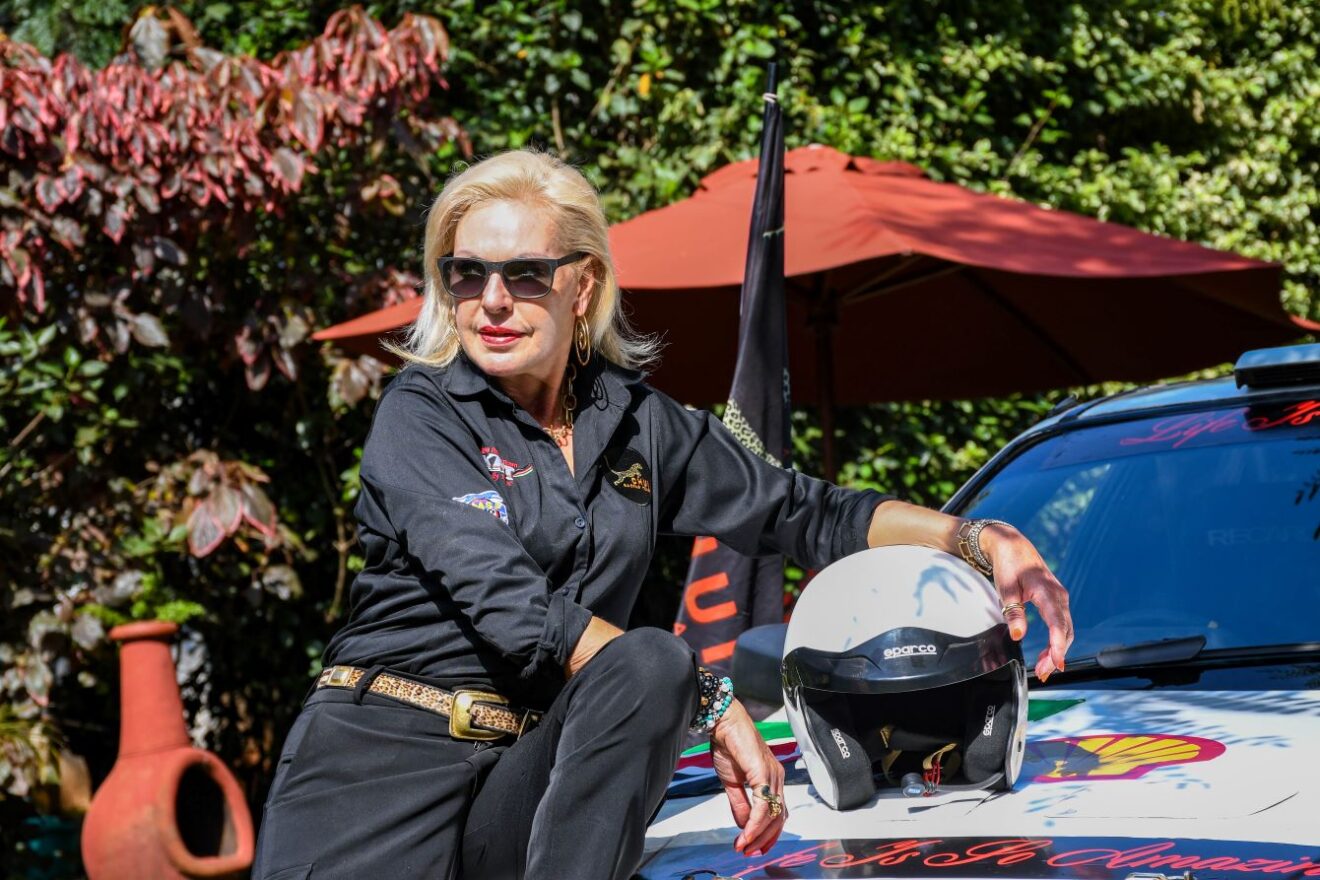
Lisa Christofferson did not set out to launch a movement. She went to the 2021 WRC Safari Rally as a guest of then Sports CS Amina Mohamed, expecting to enjoy the spectacle like everyone else. Instead, she left with a question that wouldn’t leave her alone: Where were the women?
The absence stayed with her. Motorsports in Africa had long been treated as a closed circle, and that day revealed just how small the circle really was. Christofferson decided she wasn’t going to wait for an invitation to widen it.
Nine months later, the idea that formed on the WRC sidelines took shape at the Super Cup at the Triple S Track in Kasarani. What unfolded there was unlike anything the region had seen. Christofferson still describes it with a sense of disbelief and pride.
“Eight female drivers, eight navigators… all the police and GSU people, including the lady driving the fire truck… wote wanawake. Can you imagine that?” she posed
For a sport often viewed as rigid and exclusive, the picture at Kasarani felt like a clean break from the old way of doing things. It wasn’t a ceremonial showcase. The racing was competitive, the organisation tight, and the message unmistakable. The Rally Lionesses, the first women’s rally team in Africa, had entered the sport on their own terms.
Since that debut, Christofferson and her teammates have turned their focus toward the future. They are raising funds for a bid to compete in the WRC Safari Rally and building a wider community around women’s participation in motorsport. She has urged Kenyan companies to back the project early, insisting there is room for brands willing to grow with a new wave of competitors rather than wait for the wave to arrive.
But the Safari Rally is only one part of their plan. The Lionesses want to establish a women-focused rally circuit in regions such as Samburu, Kilifi and Homa Bay, creating local events where girls can learn the sport without treating it as a distant dream. Christofferson has also directly appealed to the Ministry of Sports, saying: “I urge the Ministry of Sports to support us and get behind us, not push us to the side and ask, ‘What are these women doing in a male-dominated sport?’ and we can then take it forward, and onto the next generation.”
Her credibility comes not only from her leadership but from a personal story that has shaped her perspective. In 2005, she was given ten days to live after a stage 4 cancer diagnosis. Two decades later, she’s the driving force behind one of the most ambitious shifts in African motorsport culture.
The Rally Lionesses operate under a simple line: Drive for Change. And whether or not the Safari Rally becomes their breakthrough moment, their presence has already forced the sport to rethink who belongs at the start line


























Comments
Sign in with Google to comment, reply, and like comments.
Continue with Google